

Film studies Hou Hsiao-Hsien
好男好女 – Good Men, Good Women (1995) – Hou Hsiao-Hsien
Posted on September 15, 2015
https://www.youtube.com/watch?v=GHUS2SqOKFs
Good Men, Good Women
From Wikipedia, the free encyclopedia
| Good Men, Good Women | |
|---|---|

DVD cover
|
|
| Directed by | Hou Hsiao-hsien |
| Produced by | Katshuhiro Mizuno |
| Written by | T’ien-wen Chu |
| Starring | Annie Shizuka Inoh Giong Lim Jack Kao |
| Distributed by | Fox Lorber (US DVD) |
|
Release dates
|
1995 |
|
Running time
|
108 minutes |
| Country | Japan/Taiwan |
| Language | Taiwanese Mandarin Japanese Cantonese |
Good Men, Good Women (Chinese: 好男好女; pinyin: Hǎonán hǎonǚ) is a 1995 Taiwanese film directed by Hou Hsiao-Hsien, starringAnnie Shizuka Inoh, Lim Giong and Jack Kao. It is the last installment in the trilogy that began with A City of Sadness (1989) and continued with The Puppetmaster (1993). Like its predecessors, it deals with the complicated issues of Taiwanese history and national identity.
Film studies Hou Hsiao-Hsien
戏梦人生 – The Puppetmaster (1993) – Hou Hsiao-Hsien
Posted on September 15, 2015
https://www.youtube.com/watch?v=oi5XEqJU1Zw
The Puppetmaster (film)
From Wikipedia, the free encyclopedia
| The Puppetmaster | |
|---|---|
 |
|
| Directed by | Hou Hsiao-Hsien |
| Produced by | Chiu Fu-Sheng |
| Written by | Chu Tien-wen Wu Nien-jen |
| Starring | Lim Giong Li Tian-lu Tsai Chen-Nan |
| Narrated by | Li Tian-lu |
| Music by | Chen Ming-Chang |
| Cinematography | Mark Lee Ping-Bin |
|
Release dates
|
1993 |
|
Running time
|
142 minutes |
| Country | Taiwan |
| Language | Mandarin/Taiwanese/Japanese |
The Puppetmaster (Chinese: 戲夢人生; pinyin: Xì mèng rénshēng) is a 1993 Taiwanese film directed by Hou Hsiao-Hsien. Based on the memoirs of Li Tian-lu, Taiwan’s most celebrated puppeteer, this story covers the years from Li’s birth in 1909 to the end of Japan’s fifty-year occupation of Taiwan in 1945.
Many consider The Puppetmaster a masterpiece of world cinema. In the British Film Institute’s 2012 Sight & Sound poll, seven critics and three directors named it one of the greatest films ever made.
Plot
It tells the story of Li Tian-lu who becomes a master puppeteer but is faced with demands to turn his skills to propaganda during the Japanese occupation of Taiwan in World War II. This film is the second in Hou’s trilogy of historical films that include A City of Sadness (1989) and Good Men, Good Women (1995).
Film studies Lịch sử tư tưởng phương Đông Nho gia Văn học Trung Quốc
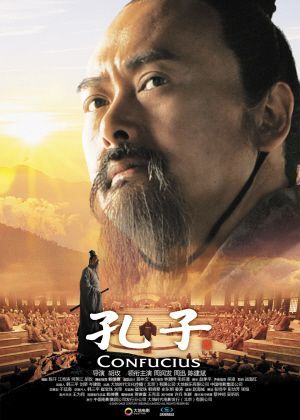
Khổng Tử – Confucius (2010) – by Hu Mei
Posted on September 14, 2015Confucius (2010 film)
From Wikipedia, the free encyclopedia
| Confucius | |
|---|---|
 |
|
| Traditional | 孔子 |
| Simplified | 孔子 |
| Mandarin | Kǒng Zǐ |
| Cantonese | Hung2 Zi2 |
| Directed by | Hu Mei |
| Produced by | Han Sanping Rachel Liu John Shum |
| Written by | Chan Khan He Yanjiang Jiang Qitao Hu Mei |
| Starring | Chow Yun-fat Zhou Xun Chen Jianbin Ren Quan Lu Yi Yao Lu |
| Music by | Zhao Jiping |
| Cinematography | Peter Pau |
| Edited by | Zhan Haihong |
|
Production
company |
Dadi Century (Beijing)
China Film Group |
| Distributed by | China Film Group |
|
Release dates
|
|
|
Running time
|
115 minutes |
| Country | China |
| Language | Mandarin |
| Box office | US$18.6 million |
Confucius (Chinese: 孔子) is a 2010 Chinese biographical drama film written and directed by Hu Mei, starring Chow Yun-fat as the titular Chinese philosopher. The film was produced by P.H. Yu, Han Sanping, Rachel Liu and John Shum.
Production on the film began in March 2009 with shooting on location in China’s Hebei province and in Hengdian World Studios in Zhejiang.
The film was scheduled to screen later in 2009 to commemorate the 60th anniversary of the founding of the People’s Republic of China, as well as the 2,560th birthday of Confucius himself. However, the release date was later moved to January 2010.



Film studies Literature Văn học Văn học & Điện ảnh
TTLV: Chất liệu văn học dân gian trong một số kịch bản điện ảnh ở Việt Nam
Posted on September 13, 2015
1. Họ và tên học viên: Lương Hồng Nhung
2. Giới tính: Nữ
3. Ngày sinh: 13-09-1985
4. Nơi sinh: Bắc Giang
5. Quyết định công nhận học viên số: 1355/2008/QĐ-XHNV-KH&SĐH Ngày 24 tháng 10 năm 2008 của Hiệu trưởng Trường Đại học Khoa học Xã hội và Nhân văn, Đại học Quốc gia Hà Nội
6. Các thay đổi trong quá trình đào tạo: Không
7. Tên đề tài luận văn: Chất liệu văn học dân gian trong một số kịch bản điện ảnh ở Việt Nam
8. Chuyên ngành: Văn học dân gian ; Mã số: 602236
9. Cán bộ hướng dẫn khoa học: GS.TS Lê Chí Quế, Khoa Văn học, Trường Đại học Khoa học xã hội và Nhân văn, Đại học Quốc Gia Hà Nội
10. Tóm tắt các kết quả của luận văn:
Qua việc khảo sát chất liệu dân gian trong phạm vi bốn bộ phim được lựa chọn, có thể thấy rằng: Các tác phẩm điện ảnh nếu biết khai thác vốn sẵn có của văn học dân gian về đề tài, chủ đề, nhân vật, cốt truyện hay cao hơn là tinh thần, tính cách, tư duy, tâm thức dân gian sẽ dễ dàng thành công trong việc khắc hoạ được bản sắc dân tộc, tạo ra được một nét riêng độc đáo cho tác phẩm của mình. Đây là chìa khoá cho những tác phẩm này vượt ra ngoài biên giới quốc gia để khẳng định vị trí và tên tuổi của mình trong bản đồ của nền điện ảnh thế giới. Sự yêu mến của khán giả nước ngoài với những bộ phim của Đặng Nhật Minh là minh chứng tiêu biểu cho hướng đi này.
Tuy nhiên, cũng cần phải thẳng thắn nhìn nhận một thực tế khác, đó là sự thất bại của nhiều bộ phim khi khai thác chất liệu của văn học dân gian, điển hình là bộ phim truyện nhựa Thằng Bờm và phim Đến hẹn lại lên. Đây cũng là một bài học lớn đối với những tác giả đang có ý đồ khai thác tiềm năng của văn học dân gian trong tác phẩm điện ảnh của mình.
Ngoài ra, trong phần cuối cùng của luận văn, chúng tôi đưa ra một số kinh nghiệm từ một số nền điện ảnh cụ thể trên thế giới đã thành công trong việc khai thác chất liệu dân gian để tạo nên tiếng nói và vị thế riêng cho nền điện ảnh nước mình với mong muốn cung cấp cho nhà làm phim Việt Nam một gợi ý, một hướng đi, một lối tư duy mới trong việc tiếp cận và khai thác tiềm năng văn học dân gian vốn có của dân tộc.
INFORMATION ON MASTER’S THESIS
1. Full name : Luong Hong Nhung 2. Sex: Female
3. Date of birth: 13-09-1985 4. Place of birth: Bac Giang
5. Admission decision number: 1355/2008/QĐ-XHNV-KH&SĐH Dated 24/10/2008
6. Changes in academic process: None
7. Official thesis title: Folk literature material in some movie scripts in Vietnam
8. Major: Folk Literature 9. Code: 602236
10. Supervisors: Prof. Dr. Le Chi Que
11. Summary of the findings of the thesis:
According to an analysis of folk literature material in the scope of 4 selected films, it can be said that: if feature films are exploited the flower of folk literature, being topics, subject, character, story or at the higher level, being spirit, characteristic, mindset and soul, film-maker will easily succeed in portraying the folk identification, making the works with unique impression. This is the key point for these movies going beyond the order to put their name and position on the map globally. The love of foreigners to Dang Nhat Minh movies definitely is the representative proof for this trend.
However, in a frank view, there are much failure in using the fold material, the typical examples are the feature film, namly Thang Bom and the film with the name of Den hen lai len. These are the valuable lessons for authors intent to exploit the potential of folk literature in their own pictures.
Besides, in the last part of this thesis, we draw some experiences from particular cinemas succeeding in using the folk material for the purpose of making the talk and position in the movie world, therefore, we give Vietnamese film-makers a new suggestion, direction and mindset of approaching and exploiting the potential of national folk literature.
Nguồn:
http://ussh.vnu.edu.vn/ttlv-chat-lieu-van-hoc-dan-gian-trong-mot-so-kich-ban-dien-anh-o-viet-nam/12830
http://dl.vnu.edu.vn/bitstream/11126/13340/1/02050002045.pdf
Film studies Văn học Trung Quốc Zhao Wei
致青春 – So Young (2013) – by Zhao Wei
Posted on September 13, 2015
https://www.youtube.com/watch?v=KxgPeme9ZRs
So Young (film)
From Wikipedia, the free encyclopedia
| So Young | |
|---|---|
 |
|
| Directed by | Zhao Wei |
| Produced by | Stanley Kwan (executive producer) |
| Screenplay by | Li Qiang |
| Based on | To Our Youth that is Fading Away by Xin Yiwu |
| Starring | Mark Chao Han Geng Yang Zishan Jiang Shuying |
| Music by | Dou Peng |
| Cinematography | Li Ran |
| Edited by | Chan Chi-wai |
|
Production
company |
Hua Shi Film Investment Co., Ltd
China Film Group Co-production: Beijing Enlight Pictures Pulin Films Co., Ltd Beijing Ruyi Xinxin Film Investment Beijing Max Times Cultural Development Dook Publishing |
| Distributed by | China Film Group |
|
Release dates
|
|
|
Running time
|
132 minutes |
| Country | China |
| Language | Mandarin |
| Budget | 30 million yuan (US$5 million) |
| Box office | 718 million yuan (US$118 million) |
So Young (simplified Chinese: 致我们终将逝去的青春; traditional Chinese: 致我們終將逝去的青春) is a 2013 Chinese drama film directed by Zhao Wei. It is based on the best-selling novel of the same name To Our Youth that is Fading Awayby Xin Yiwu. The film is Zhao’s directorial debut.
The film’s English-language title alludes to the song So Young by the British alternative rock band Suede from their self-titled debut album. In addition to the novel, the film was also based in part by Zhao’s own personal college experience in the 1990s.
The film has become a major success at the Chinese box office, grossing over US$118 million with a US$5 million budget.
Văn học Trung Quốc Zhao Wei
Mulan: Rise of A Warrior (2009) – by Jingle Ma
Posted on September 13, 2015
https://www.youtube.com/watch?v=KSoX6yfCcIE
Mulan (2009 film)
From Wikipedia, the free encyclopedia
| Mulan: Rise of a Warrior | |
|---|---|

Official poster
|
|
| Directed by | Jingle Ma |
| Produced by | Jingle Ma Wang Tian-yun Jeffrey Chan Ni Ying Li Li |
| Screenplay by | Zhang Ting |
| Starring | Zhao Wei Yu Rongguang Chen Kun Hu Jun Jaycee Chan Nicky Lee Vitas |
| Music by | Lee Shih Shiong Lee Wei Song Yi Jiayang Cheung Ah-tung Tan Dun Xiao Ke |
| Cinematography | Tony Cheung |
| Edited by | Kwong Chi-leung |
|
Production
company |
Starlight International
Media Group Beijing Galloping Horse Film & TV Production Hunan TV & Broadcast Intermediary Co., Ltd. Shanghai Film Group PKU Starlight Group Beijing Polybona Film Publishing Co., Ltd. |
|
Release dates
|
|
|
Running time
|
113 minutes |
| Country | China |
| Language | Mandarin |
Mulan: Rise of a Warrior (simplified Chinese: 花木兰; traditional Chinese: 花木蘭; pinyin: Huā Mùlán), also known asMulan: Legendary Warrior, is a 2009 Chinese film starring Zhao Wei as the titular protagonist. The director, Jingle Ma, has explained that this film is vastly different from the 1998 Walt Disney animated film and adheres more to his imagination. Zhao Wei was cast by Ma as Hua Mulan over actresses Zhang Ziyi, Michelle Yeoh, and Liu Yifei, who were reportedly also considered for the main role.
https://www.youtube.com/watch?v=Ov0za6Xb1LM
Jade Goddess of Mercy
From Wikipedia, the free encyclopedia
| Jade Goddess of Mercy | |
|---|---|
 |
|
| Directed by | Ann Hui |
| Produced by | Li Bolun Yang Buting |
| Written by | Ivy Ho Novel: Hai Yan |
| Starring | Zhao Wei Nicholas Tse Liu Yunlong Chen Jianbin |
|
Release dates
|
|
|
Running time
|
110 minutes |
| Country | China Hong Kong |
| Language | Mandarin |
Jade Goddess of Mercy or Goddess of Mercy (Chinese: 玉觀音; pinyin: Yù Guān Yīn) is a 2003 film directed by Ann Hui, starring Zhao Wei and Nicholas Tse.
It was adapted from a novel from Chinese writer Hai Yan. The title comes from a necklace featuring Kuan Yin, the “Goddess of Mercy”.
In 2003 Hai Yan also produced a TV serial based on his novel, starring Betty Sun.
https://www.youtube.com/watch?v=060Ze50SvxQ
-
Walker2012 film
-
Initial release: May 24, 2012
-
Director: Tsai Ming-liang
-
Running time: 27 minutes
-
Screenplay: Tsai Ming-liang
-
Producer: Kuan Ying Chen
-
Cast: Lee Kang-sheng
https://www.youtube.com/watch?v=MTkknZ4uUSA
Goodbye, Dragon Inn
From Wikipedia, the free encyclopedia
| Goodbye, Dragon Inn (不散) | |
|---|---|

A film poster for Goodbye, Dragon Inn
|
|
| Directed by | Tsai Ming-liang |
| Produced by | Hung-Chih Liang Vincent Wang |
| Written by | Tsai Ming-liang |
| Starring | Lee Kang-sheng Chen Shiang-chyi Kiyonobu Mitamura |
| Distributed by | Wellspring Media (USA) |
|
Release dates
|
September 17, 2004 (USA) |
|
Running time
|
82 minutes |
| Country | Taiwan |
| Language | Mandarin, Taiwanese |
Goodbye, Dragon Inn (不散, Bu San) is a 2003 Taiwanese film directed by Tsai Ming-liang about the last feature at a historic Taipei cinema.