BỘ PHIM DỰA TRÊN TÁC PHẨM THÊ THIẾP THÀNH QUẦN CỦA TÔ ĐỒNG (TRUNG QUỐC).

-
Thể loại: Tâm Lý, Tình Cảm
-
Thời lượng: 125 phút
-
Đạo diễn: Trương Nghệ Mưu
-
Diễn viên: Củng Lợi
-
Năm phát hành: 1992
-
Quốc gia: Trung Quốc

BỘ PHIM DỰA TRÊN TÁC PHẨM THÊ THIẾP THÀNH QUẦN CỦA TÔ ĐỒNG (TRUNG QUỐC).
BỘ PHIM DỰA TRÊN TIỂU THUYẾT SỐNG CỦA DƯ HOA (TRUNG QUỐC)
■《活著》(英文:To Live),1994年中國電影,是一部改編自同名小說,由張藝謀執導,葛優、鞏俐領
■ 故事主角歷經中國近現代多個不同時代(從中國國民黨統治大陸末期的1940年代到文化
■ 該片因涉及政治因素,對中國大陸解放後的若干政策多有諷刺,主人公的悲劇是在人民公社
國立中山大學「余光中人文講座」為促進人文思考、創造人文環境、深化人文素養,將定期邀請世界級、大師級、重量級藝文界人士蒞校訪問或駐校,與國立中山大學榮譽教授余光中進行各種主題的對談。此次由余光中教授親筆信函邀請、歷經中山大學文學院院長黃心雅暨中山大學團隊長達三個多月之越洋聯繫,「余光中人文講座」首場敲定由國際大導演李安擔任主講人。
文壇與電影界的兩位大師,其實已在數十年前便有藝術生命上的交流。余光中教授四十四年前寫的長篇散文《焚鶴人》(1969),曾被時值學生的李安改拍成短片「星期六下午的懶散」(1976年拍攝,18分鐘超八厘米劇情黑白短片),並以此片申請到美國紐約大學電影系。中山大學表示,此次講座入場券在開放索票十分鐘內便被索取一空,還有人排隊排了三個小時,也有民眾大排長龍希望補位,為了擴大分享「余光中人文講座」的精彩內容,此次講座將全程記錄,未來將公開使社會大眾以閱聽形式貼近兩位大師的交流。
明年三月,第二場「余光中人文講座」將由現居香港的中央研究院院士、前香港中文大學校長、著名社會學家金耀基先生駐校講座、座談也將為其策畫主題書展,讓有興趣的學子及民眾有機會拜讀學者著述。五月份則邀請中國當代文學女作家王安憶女士,以「故事與主題」為題講座。王安憶是全球華文讀者心目中最重要的華文小說家之一,台灣旅美文學評論家王德威謂王安憶是繼張愛玲後,又一海派文學傳人,長篇小說《長恨歌》獲獎無數,作品被譯成英、德、荷、法、捷、日、韓、以色列等多國文字。明年五月王安憶作品書展與簽書會將配合講座舉行,台灣讀者將得以親見作家身影。
余光中指出媒體報導李安格局氣虛一說,李安則說報導篇幅有限,讓他到處解釋、道歉、冒冷汗,今天也謝謝余光中老師給他機會再申訴一下。李安解釋,格局不是說要拍歷史大片,而是體格健壯的意思,電影要小、要精準。這次看到的問題包括結構不夠完整兼顧,還有許多一廂情願地推演,推演的能力不夠紮實,以及內容不夠營養、關係經營不夠精采。李安說,情感的經營、關係的解構建構等不夠精采,或許因為文化教育造成怠惰,讓我們缺乏競爭力,「跟外面比的時候會吃虧」,李安也呼籲,不能老靠民族感情或一廂情願的熱情。
李安接著說,這次的結果值得警惕,電影反映社會文化,這次看很多臺灣片都有很想愛但拉不到票的痛苦。李安認為該學習西方的、該補強的,該保留的要好好經營茁壯,在結構、環境推演、邏輯性上要加強,這是面對世界競爭需要有的強健體魄。
2013/11/25/大成報/記者吉雄世/高雄報導

Dĩ nhiên, các lời chỉ trích của dân mạng đang nói tới ở đây, phần lớn là của các phần tử chủ nghĩa dân tộc cực đoan, đã không thể nào chịu nổi chuyện Angelina Jolie nhấn mạnh Lý An không là một người Trung Quốc.
Trang tin Shanghaiist.com cho biết Angelina Jolie tuyên bố trong buổi họp báo ra mắt phim Maleficent. Trong giờ phút có nhiều người lắng nghe nhất, đứng cùng với diễn viên Brad Pitt, người nữ diễn viên xinh đẹp này đã mỉm cười duyên dáng và nói rằng “đạo diễn mà cô yêu thích là Lý An, người Đài Loan” (Taiwanese, not Chinese – tạm dịch: Người Đài Loan không phải người Trung Quốc).
Trên mạng xã hội Weibo, Haohao report… đều có những tranh cãi dữ dội, cũng như những lời kết tội, thậm chí gọi người diễn viên lừng danh này là quá thiếu hiểu biết để nhận ra sự đúng đắn. Giới trẻ Đài Loan cũng bắt đầu nhảy vào cuộc tranh cãi để bảo vệ thần tượng của mình.
Ngay trên một vài bài dịch của báo điện tử Việt Nam, cũng có nhận định cho là Angelina Jolie đã “vô tình” khi gọi như vậy. Nhưng nếu bỏ ra ít phút để theo dõi cuộc đời của người nữ nghệ sĩ này, bất kỳ ai cũng có thể thấy rằng, đó là một thái độ, chứ không thể là “vô tình” hoặc “không hiểu biết”.
Từ nhiều năm nay, Angelina Jolie nằm trong danh sách đen của công an Trung Quốc vì là một trong những người luôn cất tiếng đòi bảo vệ văn hóa và con người Tây Tạng. Bên cạnh những thành công của cô về điện ảnh, Angelina Jolie còn là một đại sứ Thiện chí, hoạt động nhân đạo xuất sắc của Cao ủy tị nạn Liên hiệp quốc (UNHCR) trong nhiều năm nay, với tầm hoạt động trải rộng từ châu Phi đến châu Á.
Thái độ là một giá trị chân chính của nghệ sĩ, dù đứng ở đâu, dù đang như thế nào. Hành động nhỏ của Angelina Jolie khiến cho những người lâu nay vẫn yêu mến cô không thất vọng về một tính cách mạnh mẽ và nhất quán với sự thật.
Thái độ là một bảng khắc tên danh dự cao quý, mà có thể trong đời một nghệ sĩ, có thể chỉ có một cơ hội duy nhất để bước vào. Câu chuyện của hôm nay, nhắc nhở rất nhiều điều khiến cho loài người tử tế đã nắm tay nhau, cùng chung niềm kiêu hãnh.
Steven Spielberg đã từ chối vai trò đạo diễn lễ khai mạc Olympic 2008 ở Bắc Kinh để phản đối việc đàn áp con người. Trong danh mục thành tích sự nghiệp vĩ đại của Steven Spielberg, có thể đã bỏ trống phần lớn nhất là đạo diễn cho Oplympic, nhưng ông có thể thanh thản, và rực sáng hơn nữa vì thái độ công chính của mình.
 Cảnh trong phim Maleficent.
Việc đấu tranh bền bỉ, thậm chí lăn xả vào các sự kiện, nhằm giúp cho văn hóa và con người Tây Tạng của Richard Gere hay George Clooney cũng là một thái độ chọn lựa nhất định mà họ mong muốn, giữa lúc cuộc sống thành đạt của họ có đặc quyền hưởng thụ và không cần phải quan tâm điều gì khác ngoài sự nghiệp.
Không ai ép được Christian Bale đang đóng phim ở Trung Quốc, đã âm thầm mạo hiểm đi cả trăm cây số, ghé thăm và ủng hộ tinh thần luật sư dân quyền khiếm thị Trần Quang Thành vào năm 2011, sau đó cuộc rượt đuổi của công an Trung Quốc với Christian Bale trở thành câu chuyện nghẹt thở đến mức nhiều nhà sản xuất phim đề nghị được dựng thành phim.
Ở Việt Nam, lời dạy về thái độ cũng được ghi lại từ rất xưa. Năm 1957, bài thơ Lời mẹ dặn của Phùng Quán cũng từng khắc “Đi trọn đời trên con đường chân thật, yêu ai cứ bảo là yêu, ghét ai cứ bảo là ghét, dù ai ngon ngọt nuông chiều, cũng không nói ghét thành yêu”.
“Tuổi tên tinh biểu nay còn lại
Bia đá ngàn năm cỏ mọc tràn”
Nguyễn Trãi, bậc đại trí giả của người Việt từng để lại ẩn dụ cho đời: mọi thứ sẽ đi qua, chỉ còn nhân cách ở lại. Không phải riêng Angelina Jolie, mà với bất kỳ ai, thái độ sống đúng và tử tế là một hành lang dẫn đến căn phòng vinh danh con người và chính mình, với mọi điều trân trọng.
Nguồn:
http://www.baomoi.com/Vi-sao-Angelina-Jolie-dam-goi-dao-dien-Ly-An-la-nguoi-Dai-Loan/c/14070259.epi
http://www.asiancinevision.org/ang-lee-and-zhang-yimou-interview/
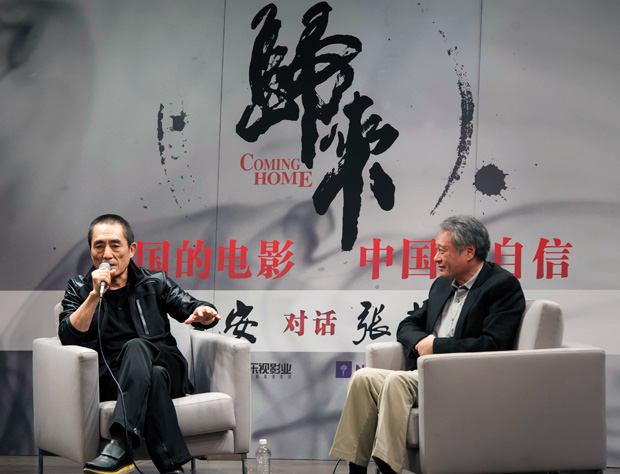
Film directors Zhang Yimou, left, and Ang Lee talk to an audience of film students and members of the Chinese-language press at Cooper Union in New York last night. Zhang is the director of the forthcoming film about the Cultural Revolution, <em>Coming Home</em>.
Ang Lee, the Oscar-winning American film director with Taiwan roots, and Zhang Yimou, the storied veteran of mainland Chinese moviemaking, joined together on March 27 at Cooper Union in New York in a discussion billed “Chinese Film, Chinese Confidence” by Zhang’s backer, LeVision Pictures.
Lee’s is a household name around the world among fans of his Hollywood blockbusterLife of Pi, an exploration of man’s relationship to faith. Zhang, on the other hand, might be more widely remembered these days for his design of the opening and closing ceremonies of the Beijing Olympics in 2008 than for any of his films. Sure, true world cineastes revere him for his groundbreaking works of the late 1980s and early 1990s (e.g., Red Sorghum, Raise the Red Lantern). But his last film, The Flowers of War, barely registered in North America, still the world’s largest movie marketplace in gross sales terms ($10.92 billion in 2013), despite a starring role for Oscar-winner Christian Bale.
With China’s box office up 27.5 percent in 2013 to $3.5 billion, according to the State Administration of Press, Publications, Radio, Film, and Television, and expected to overtake North America’s in five years, Zhang is at once trying to gain a footing in Hollywood as China’s most entrenched director and trying to avoid being left behind by his home audience. Now decades his junior, Chinese moviegoers helped crown the 2012 comedic road movie Lost in Thailand, by first-time director Xu Zheng, the most successful Chinese-language movie of all time.
At the same time as Zhang is coming West—as the most visible example of the central government’s call to use the media to promote China’s image to the world—the Hollywood studios are headed East, promoting the best calling cards the American Dream ever knew: blockbuster movies. The cast of Spiderman 2 was on a junket in China just this week. Hollywood is ramping up its efforts to engage the interest of younger, more affluent Chinese moviegoers, whose swelling ranks now spend more on movie tickets each year than any other audience in the world after North Americans.
And Zhang wants America’s attention. He is in talks to direct an English-language co-production in Hollywood about the Great Wall of China —an experiment in trying to please two markets at once. Zhang said he was looking to Lee for advice to spread his message in a tongue he does not speak.
“Ang Lee occupies both worlds, so I want to learn from him,” Zhang said. “We are proud to see him represent Chinese in Hollywood,” a place he acknowledged might have something to offer China.
“Hollywood came to me, I didn’t go to Hollywood. They’re interested in the Chinese market. This cooperation with Hollywood will be a good promotion for Chinese culture.”
The evening’s moderator, New York University film professor Christine Choy, asked Lee how he makes movies for the world and he was forthcoming with his answer.
“When America built the movie industry over one hundred years ago, they also built culture for the world. In America these days, filmmakers are playing to the audience, but in China you’ve still got to make sure you are pleasing the leaders, the boss. You have to work in a basic language so the people can understand you.”
With China’s new economic power and political confidence, Zhang predicted it wouldn’t be six years before China’s box office becomes number one worldwide. “The whole industry will lean toward China,” he said.
That day may come, but the mounting costs of the breakneck development of China’s movie industry infrastructure—its theaters and its studios, for instance—add increased real-time pressure on China’s few marquee directors like Zhang to turn a big profit now. Lee touted the wisdom of a long-term strategy.
“The Chinese market has to grow into maturity. If it’s pushed too hard, or looks only at money, it won’t be natural or good,” Lee said. One trap to avoid is paying Hollywood too much mind, he said. “China must learn its own way. I hope the leaders will be less restrictive and can trust the audience. On this score I am optimistic.”
Both Zhang and Lee said they put little time into the Hollywood practice of reworking scripts to try to achieve what market analysts say could result in the greatest commercial success at any given moment.
“I don’t like to plot too much,” said Zhang, saying he’s in a tough spot. Whereas he used to be able to turn to early 1980s books in a period of relative freedom in media in China, when the beginnings of a civil society emerged after the Cultural Revolution, today, he said, “There are many reasons, and authors won’t like me saying this, but I can’t use much in today’s novels.”
One young male student at NYU—where Zhang’s daughter also studied filmmaking—asked Lee and Zhang what role awards should play in a director’s life.
“I don’t think about it,” Lee said. “I just do it.” Zhang followed by saying that he never had expected an award but that it changed the game when he won his first big one—the Golden Bear at the Berlin International Film Festival in 1988 for Red Sorghum. “Awards mean media attention, which means investor interest, which is the start of the next film.”
The directors’ discussion was hosted by NYU and LeVision, the private Beijing-based company where Zhang was named Creative Director in 2013. A room of about one hundred mostly-Chinese and Asian American guests gathered in the Frederic Rose Theater in the basement of a late-model frosted glass and steel building on Cooper Square. Reporters not with the Chinese media were invited by LeVision on the condition that they not write about Coming Home, Zhang’s new film about the Cultural Revolution.
For the dozens of Chinese reporters in the room in both print and broadcast media, the directors were preceded to the stage by a montage of their best known Chinese-language films, titles such as Lee’s Crouching Tiger, Hidden Dragon, the highest-grossing foreign language film ever to screen in North America (box office total in 2000, $128 million), and Zhang’s Hero, the third-highest grossing ($53 million in 2002). Between the movie clips, word-pairings in Chinese characters and English translations—“Broad / Profound,” “Expansive/Majestic,” “Vigorous/Serene,” and “Tranquil/Dynamic”’—flashed across the screen. A LeVision representative said the trip was designed to get Coming Home press attention back in China in the run up to its premiere around the May 1 Labor Day national holiday, a peak moviegoing time.
The two casually-dressed directors, Zhang is his typical all-black, down to his sneakers, and Lee in khakis and a blazer, were seated in front of towering advertising posterboards for the drama about a woman writer’s experience during the tumultuous time of the 1960s and 1970s when the politics of paranoia ruined many lives. It is a period only just beginning to be readdressed in the popular conscience today.
Zhang’s Hero and Lee’s Crouching Tiger for years set the standard against which many Chinese language films were judged. Both films’ commercial success spawned countless imitators and over a decade of historical martial arts epics of which today’s audience has grown tired. Younger directors are serving up romantic comedies and contemporary action films, but there still are few films shot in Chinese and given official approval for theatrical release that deal with the country’s vision for its future.
“I won’t restrict myself to the past,” Zhang said. “I will make films about the future. Today, very few films in China are filled with fantasy and imagination.” Pinpointing one reason why that might be the case, one audience member asked when Zhang had made compromises in his work.
“All the time,” Zhang replied without hesitation. “Especially in China. From the very beginning one has to expect that the story won’t pass censorship. Even Ang Lee is no stranger to compromise. What we learn is that after compromises you can still recover your original intention.”
For his part, Lee said that the struggle of filmmaking was about “compromise and persistence.”
“If you’re too inflexible and strong, you’ll snap. If you’re too soft, you’ll give up. You have to be flexible. Directing is like delivering the mail. The movie directs us to the destination.”
Asked what advice they would offer filmmakers just starting out, Zhang expressed a bright forecast for China. “The next decade will be golden for new directors. Seize the day and train yourselves,” he said. “Take your hopes and dreams and let people know about them.”
Lee sized up the audience for Chinese directors as bigger than ever before since Chinese are everywhere in the world today. “Many young directors today see us [older directors] and say, ‘Get outta my way.’”
http://www.chinafile.com/Ang-Lee-Zhang-Yimou-Talk-Movies